Frequently Asked Questions about Spravato
What is Spravato?
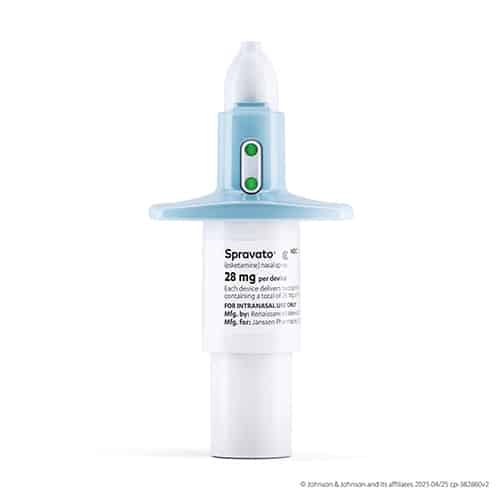
Spravato is the brand name for esketamine, an FDA-approved prescription nasal spray used for certain adults with depression. It is a Schedule III controlled substance and is available only through a restricted safety program called SPRAVATO REMS.
Who may be considered for Spravato?
Adults with treatment-resistant depression may be condidates after a clinical evaluation. Spravato is also approved, in combination with an oral antidepressant, for depressive symptoms in adults with MDD who have acute suicidal ideation or bahavior. Insurance plans may apply additional authorization criteria.
Do I have to take an oral antidepressant with Spravato?
Not always. For treatment-resistant depression, current FDA labeling allows Spravato to be used as monotherapy or together with an oral antidepressant. For depressive symptoms associated with MDD and acute suicidal ideation or behavior, Spravato is used together with an oral antidepressant.
How often is Spravato given?
For treatment-resistant depression, the FDA-recommended schedule generally begins with twice-weekly treatment for four weeks, followed by weekly treatment for weeks five through eight. Beginning in week nine, treatment is typically once weekly or every two weeks, individualized to the least frequently schedule needed to maintain response. Your clinician determines the appropriate schedule.
How long does each appointment take?
Patients must be monitored for at least two hours after each dose. Because there is also time needed for check-in, pre-dose assessment, administration, and discharge, patients should plan for the visit to last longer than the minimum two-hour monitoring period.
Can I drive myself home after treatment?
No. Spravato can impair attention, judgement, thinking, reaction time, and coordination. Patients should arrange transportation home and should not drive or operate machinery until the next day after a restful sleep.
Can I eat or drink before treatment?
The FDA prescribing information advises patients to avoid food for at least two hours before treatment and liquids for at least 30 minutes before treatment. If you use a nasal cortcosteroid or nasal decongestant on a treatment day, it should generally be taken at least one hour before Spravato.
What side effects can occur?
Commonly reported effects include dissociation, dizziness, nausea, sedation, vertigo, increased blood pressure, headache, anxiety, vomiting, and feeling intoxicated or disconnected. SCP monitors patients during each treatment session and determines when it is safe to leave.
Why is monitoring required?
Spravato carries important safety risks, including sedation, dissociation, respiratory depression, increased blood pressure, and the potential for abuse or misuse. For that reason, it must be administered in a certified healthcare setting with post-dose observation.
Is Spravato the same as ketamine?
No. Esketamine is chemically related to ketamine, but Spravato is a specific FDA-approved intranasal medication with its own dosing, labeling, and REMS requirements. It is different from intravenous, intramuscular, oral, or compounded ketamine treatments.
Does Spravato treat suicidal thoughts?
Spravato is approved, together with an oral antidepressant, for depressive symptoms in adults with MDD who have acute suicidal ideation or behavior. The FDA labeling states that its effectiveness in preventing suicide or reducing suicidal ideation or behavior has not been demonstrated, and treatment does not replace hospitalization when hospitalization is clinically necessary.
Will insurance cover Spravato?
Many health plans provide coverage when their clinical criteria are met, but requirements differ by insurer and plan. SCP can verify benefits and help submit prior-authorization documentation when required.
How do I get started?
Patients and referring clinicians can contact SCP to begin the screening process. The SCP team will explain what records are needed, review eligibility, and coordinate the next steps for consultation and, when appropriate, treatment.