Transcranial Magnetic Stimulation (TMS) in North Kingstown
SCP provides transcranial magnetic stimulation in North Kingstown, RI. Call 401-343-4343 to schedule a consultation today.
TMS is a noninvasive, FDA-approved treatment that uses gentle magnetic pulses to stimulate specific areas of the brain involved in mood regulation. It is most commonly used for treatment-resistant depression—that is, depression that has not improved with traditional treatments such as medication or psychotherapy—but it can also be helpful for other conditions, including certain anxiety disorders and obsessive-compulsive disorder (OCD).
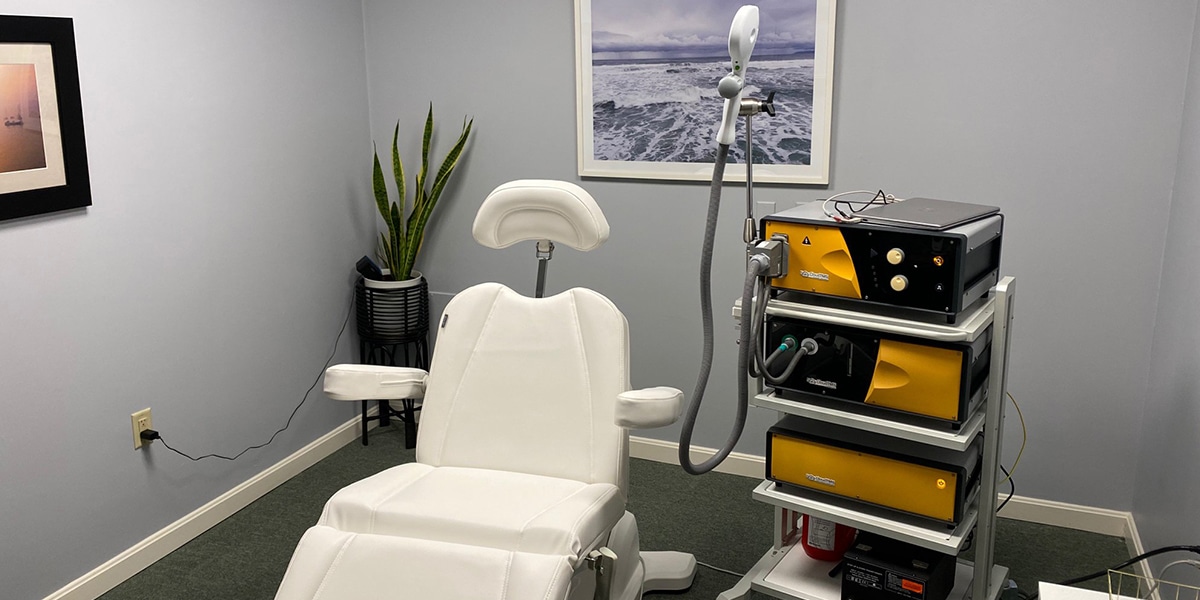
During TMS treatment, patients sit comfortably in a chair while a specialized device delivers focused magnetic pulses to the scalp. These pulses activate neural pathways that are often underactive in depression, helping to restore healthier patterns of brain activity over time. Treatment sessions typically last about 20 to 40 minutes, are performed five days a week for several weeks, and do not require anesthesia or recovery time.
TMS is well-tolerated by most patients and has few side effects, with the most common being mild scalp discomfort or headache that typically lessens over the course of treatment. For individuals who have not found relief from medication or who prefer a non-medication approach, TMS can be a safe and effective option for improving mood and overall well-being.
Transcranial magnetic stimulation (otherwise known as TMS) is a noninvasive office-based procedure that uses magnetic pulses to induce an electrical charge, in effect stimulating certain parts of the brain. Many people are aware of the dramatic (and inaccurate depiction) of electro-convulsive therapy in the movie ONE FLEW OVER THE CUCKOO'S NEST. We have known since the late 1930’s that stimulating certain areas of the brain with electricity can treat mental illness. Though ECT is extremely safe and effective, it is also quite cumbersome to have done, with patients having to go under general anesthesia 6-12 times over a period of 2-8 weeks. The first use of a magnet to stimulate the brain was in 1985, and TMS came to widespread use in 2008. As of now, it is FDA approved for treatment-refractory major depressive disorder, though it has been shown to be helpful in obsessive compulsive disorder as well as other conditions. This treatment is reserved for patients who have failed psychotherapy and at least four adequate trials of antidepressants.
The process is simple:
- The patient sits in a chair that resembles those found at a dentist’s office.
- A cloth cap is placed on the patients head.Three measurements are made and fed into a computer.
- A line is drawn with a dot placed on the cap.
- The physician then places a wand over the patient's head and delivers brief, painless, magnetic pulses over that area until the right thumb begins to twitch. At that time, the “motor threshold” was established.
- After this the pulses are delivered over a course of 19 minutes.
- The patient is able to drive home and comes back every weekday for about a month.
Common side effects are primarily limited to site tenderness and dizziness: Fainting and seizures are rare.
Frequently Asked Questions About TMS
What does TMS therapy do?
Transcranial magnetic stimulation, or TMS, is a noninvasive procedure that improves symptoms of OCD and depression by using magnetic fields to stimulate nerve cells in the brain. TMS is often used when other treatment options haven’t produced results.
How successful is TMS?
Research shows that 50 to 60% of people with depression that hasn’t responded to previous treatment see a clinically meaningful benefit from TMS. Approximately one-third of patients who have success with TMS experience a full remission of their symptoms.
What does TMS feel like?
TMS treatments are often described as feeling like tapping on the scalp, even though there is no physical touching of the scalp involved. This tapping sensation is caused by the magnetic pulses.
Does insurance cover TMS?
Most major commercial insurance companies, including Cigna, United Healthcare, Aetna, and BCBS, will cover TMS treatment. We can help you understand your benefits and any out-of-pocket costs.
Can TMS replace medication?
TMS is most commonly used in conjunction with psychiatric medications, but it can also replace medications that either have not been effective or are not tolerated by a patient.
Is TMS as effective as ECT?
TMS is an effective treatment for depression, but it is not as effective as ECT and it requires more sessions. On the other hand, TMS is more affordable and has fewer side effects than ECT. ECT requires general anesthesia, but TMS does not; you can even drive to and from the sessions yourself.